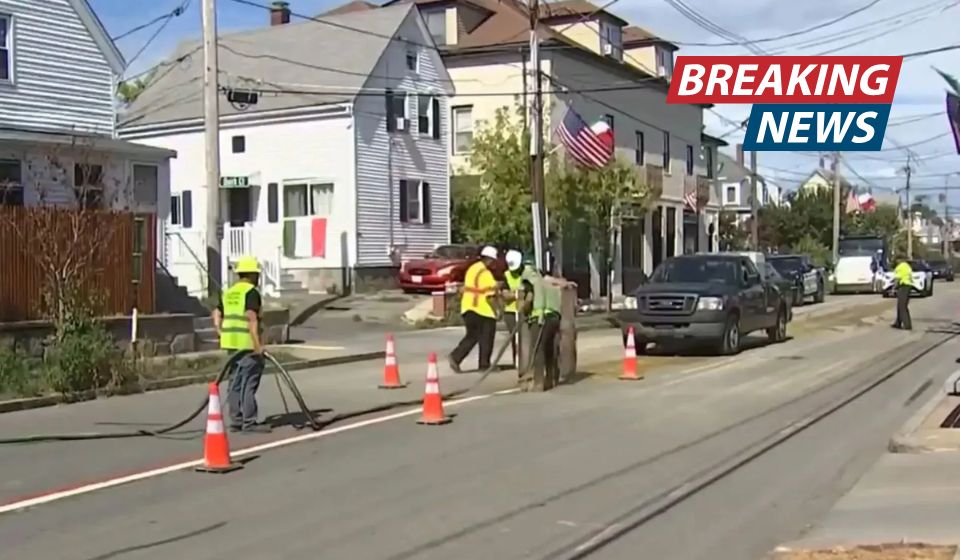
Three new colors added to central road markings as Americans in US state say goodbye to iconic yellow design

Residents of a historic neighborhood in Massachusetts are celebrating after officials approved the return of colorful road markings that had become a symbol of local identity for nearly a century. The decision means the traditional double-yellow center lines on a well-known street will be replaced by a unique three-color design featuring red, white, and green—the colors of the Italian flag.
A Road Marking Change That Sparked a Community Battle
The controversy centers on Adams Street in the Nonantum neighborhood of Newton, Massachusetts. For approximately 90 years, the center of the street displayed stripes inspired by the Italian flag, reflecting the strong Italian-American heritage of the area. The colorful markings became one of the neighborhood’s most recognizable features and a source of community pride.
However, in 2025, city officials removed the historic colors and replaced them with standard double-yellow traffic lines. At the time, local authorities argued that state and federal traffic regulations required the use of yellow center lines on the roadway.
The move triggered strong opposition from residents, many of whom viewed the change as an attack on the neighborhood’s cultural identity. Community members organized protests, publicly criticized the decision, and some even repainted the colors themselves after city crews removed them. The conflict quickly became a symbol of the tension between transportation regulations and local traditions.
Why Yellow Lines Were Originally Installed
Yellow center lines have long been a standard feature on American roads because they help drivers distinguish opposing traffic flows. Under U.S. traffic-marking standards, yellow lines typically separate vehicles traveling in opposite directions, while white lines separate traffic moving in the same direction. This color system became standardized nationwide during the 1970s to improve safety and consistency for drivers.
Double-yellow lines are particularly important because they usually indicate a no-passing zone, warning motorists that crossing into the opposite lane could be dangerous. The widespread use of yellow lines has made them one of the most recognizable road markings in the United States.
A New Mayor Finds a Compromise
The dispute continued until Newton elected a new mayor, Marc Laredo, who sought a solution that would preserve both safety requirements and community traditions. After reviewing the roadway layout, city officials developed a plan that would allow the historic colors to return without violating traffic regulations.
The city’s Department of Public Works created designated parking lanes along Adams Street, effectively narrowing the travel lane. According to city officials, this redesign means the road no longer requires the traditional double-yellow center line that had caused the controversy.
As part of the new arrangement:
- A white reflective stripe will run down the center of the roadway.
- Green stripes will be painted alongside the center line.
- Red stripes will complete the design.
Together, these three colors recreate the appearance of the Italian flag while maintaining roadway visibility and safety.
The Three New Colors Replacing the Yellow Design


4
The new road marking scheme consists of:
1. Red
The red stripe represents one side of the Italian tricolor and forms part of the neighborhood’s cultural symbolism.
2. White
A reflective white center stripe will serve as the main traffic guidance line while also representing the middle section of the Italian flag. White markings are commonly used in road systems to guide traffic and improve visibility.
3. Green
Green completes the tricolor design and reflects the final section of the Italian flag that has historically appeared on Adams Street.
Together, the red, white, and green markings restore the visual identity that residents say has defined the neighborhood for generations.
Why the Colors Matter to Residents
Nonantum has long been known as one of the most prominent Italian-American communities in the region. The road markings were more than decorative paint; they served as a public expression of the neighborhood’s history, immigrant roots, and cultural heritage.
Residents argued that removing the colors erased a piece of local history. The intensity of the reaction—including unauthorized repainting efforts and public demonstrations—showed how deeply the community valued the distinctive street design.
For many locals, the return of the tricolor stripes represents recognition of the neighborhood’s identity rather than simply a change in road markings.
Timing Ahead of a Major Festival
City officials have indicated that the repainting work is expected to be completed before Newton’s annual Italian-American festival in July. The timing is particularly significant because the festival celebrates the very heritage represented by the road’s iconic colors.
Mayor Laredo stated that the festival would take place with the colors of the Italian flag once again displayed on Adams Street, allowing residents and visitors to experience a restored piece of neighborhood tradition.
Broader Significance
The Adams Street story highlights an increasingly common challenge faced by cities across America: balancing modern transportation standards with local history and cultural identity. While road markings are typically viewed as functional safety features, this case demonstrates how they can also become powerful community symbols.
By replacing the iconic yellow center line with red, white, and green markings, Newton officials found a compromise that preserved road safety requirements while restoring a cherished neighborhood landmark. For residents of Nonantum, the return of the tricolor stripes marks the end of a long dispute and the revival of a tradition that has defined their community for nearly a century.
Key Facts at a Glance
| Detail | Information |
|---|---|
| Location | Adams Street, Nonantum neighborhood, Newton, Massachusetts |
| Original Design | Italian flag colors (red, white, green) |
| Replacement | Standard double-yellow center lines |
| Reason for Removal | Compliance with traffic regulations |
| Community Response | Protests, public opposition, and repainting efforts |
| New Solution | Parking-lane redesign eliminating need for double-yellow lines |
| New Markings | Red, white, and green stripes |
| Completion Target | Before the annual Italian-American festival in July |
| Significance | Restoration of a nearly 90-year-old cultural symbol |