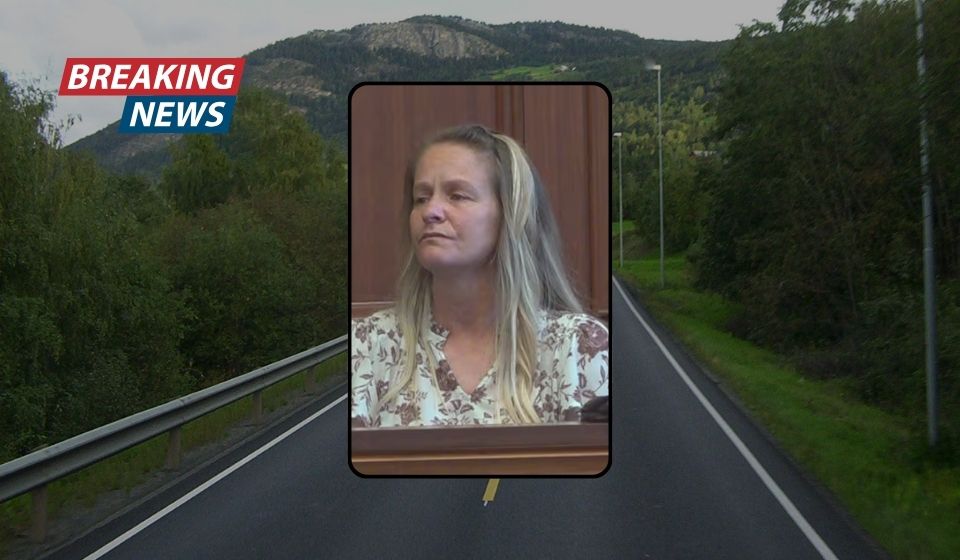
Woman blames deer for killing man with her Ram truck after crossing center line at over 90 mph, crashing into victim’s Kia

A Kentucky woman who claimed she swerved to avoid deer before a deadly collision has been convicted in connection with a crash that killed another motorist after prosecutors argued she was driving at an extremely dangerous speed on a rural roadway. The case centered on whether the collision was a tragic accident caused by wildlife in the road or the result of reckless driving that led to a fatal head-on crash.
Deadly Collision on Elkhorn Creek Road
Crash Occurred on a Rural Kentucky Highway
According to Kentucky State Police, the fatal crash happened on July 16, 2022, at approximately 9:25 p.m. on Elkhorn Creek in Pike County, Kentucky, a winding rural roadway near the Kentucky-Virginia border.
At the time of the collision, 48-year-old Dusty Ratliff was driving a silver 2017 Ram 2500 pickup truck. Traveling in the opposite direction was 44-year-old James Kelly, who was behind the wheel of a black 2009 Kia Spectra.
Truck Crossed Center Line
Investigators determined that Ratliff’s pickup crossed the center line and struck Kelly’s Kia head-on. The impact was severe enough to send both vehicles significant distances from the point of collision.
State troopers responding to the scene reportedly found Kelly’s Kia turned around and located approximately 40 feet from the impact area, while Ratliff’s Ram truck came to rest more than 70 feet away.
Victim Pronounced Dead at the Scene
Coroner Confirmed Driver’s Death
Emergency responders arrived following the crash, but James Kelly could not be saved. The Pike County Coroner’s Office pronounced the 44-year-old dead at the scene.
Authorities did not report any significant injuries requiring emergency medical treatment for Ratliff at the crash site.
The death of Kelly became the central focus of the criminal case that followed, with prosecutors arguing that Ratliff’s driving behavior directly caused the fatal collision.
Prosecutors Pointed to Extreme Speed
Expert Witness Estimated Truck Was Traveling Up to 92 MPH
During trial proceedings, prosecutors presented evidence suggesting that Ratliff was driving at an exceptionally high speed before the collision. An expert witness testified that she may have been traveling as fast as 92 miles per hour on the winding roadway moments before the crash.
The prosecution argued that such a speed on a rural road created a substantial and obvious risk to other motorists. They maintained that the dangerous driving behavior, rather than an unavoidable emergency, caused the deadly wreck.
State Argued Driver Was Aware of the Danger
Prosecutors contended that anyone driving at that speed would have understood the serious risk of crossing into oncoming traffic or losing control. Their case focused on proving that Ratliff’s actions rose beyond simple negligence and amounted to criminal conduct resulting in Kelly’s death.
Driver Claimed Deer Were in the Road
Ratliff Testified About Wildlife Encounter
At trial, Ratliff offered a different explanation for what happened that night. She testified that she had been working at a restaurant owned by her family before heading home. According to her testimony, she was not rushing and had no reason to drive recklessly.
She told jurors that it was dark and that she encountered several deer in the roadway. Ratliff claimed she attempted to maneuver around the animals before losing memory of the events that followed.
“I Went to Go Around Them”
During her testimony, Ratliff stated, “I went to go around them, and I don’t remember nothing after that.” She also testified that she remembered seeing lights coming toward her before the crash and recalled being in significant pain afterward.
Her account formed the foundation of the defense argument that the collision resulted from an unexpected roadway hazard rather than criminal recklessness.
Defense Called the Crash a Tragedy, Not a Crime
Attorneys Argued It Was an Accident
Defense lawyers maintained throughout the proceedings that the collision was a tragic accident rather than an intentional or criminal act. They emphasized Ratliff’s claim that she was attempting to avoid deer and argued that she took steps to slow her vehicle.
Defense attorney Garland Arnett told the court that Ratliff had been braking heavily and trying to avoid danger. According to the defense, the circumstances did not justify a murder conviction or criminal punishment for what they described as an unfortunate accident.
Defense Rejected Murder Allegation
The case originally began with a much more serious charge. Ratliff was initially charged with murder, a charge carrying far more severe potential penalties. Defense attorneys argued that the facts did not support such an accusation and urged jurors to view the crash as a noncriminal tragedy.
Jury Reached Manslaughter Verdict
Convicted of Second-Degree Manslaughter
After considering the evidence, a jury found Dusty Ratliff guilty of second-degree manslaughter in connection with James Kelly’s death. The verdict represented a middle ground between the prosecution’s original murder allegation and the defense claim that no crime had occurred.
The conviction means jurors concluded that Ratliff’s actions were criminally responsible for the fatal crash, even though they did not find her guilty of murder.
Sentencing Recommendation and Potential Prison Term
Prosecutors Seek Ten-Year Sentence
Following the conviction, prosecutors recommended that Ratliff receive a 10-year prison sentence. At the time reports were published, a formal sentencing date had not yet been announced.
The final sentence will determine how long Ratliff spends behind bars for the crash that claimed the life of James Kelly nearly four years earlier.
Lasting Impact of the Case
The case drew significant attention because of the starkly different explanations presented by the two sides. Prosecutors argued that excessive speed on a winding rural road caused a fatal head-on collision, while the defense maintained that an unexpected encounter with deer triggered an unavoidable tragedy. Ultimately, jurors sided with the prosecution’s view that Ratliff’s driving amounted to criminal conduct, leading to the death of James Kelly and resulting in her conviction for second-degree manslaughter.