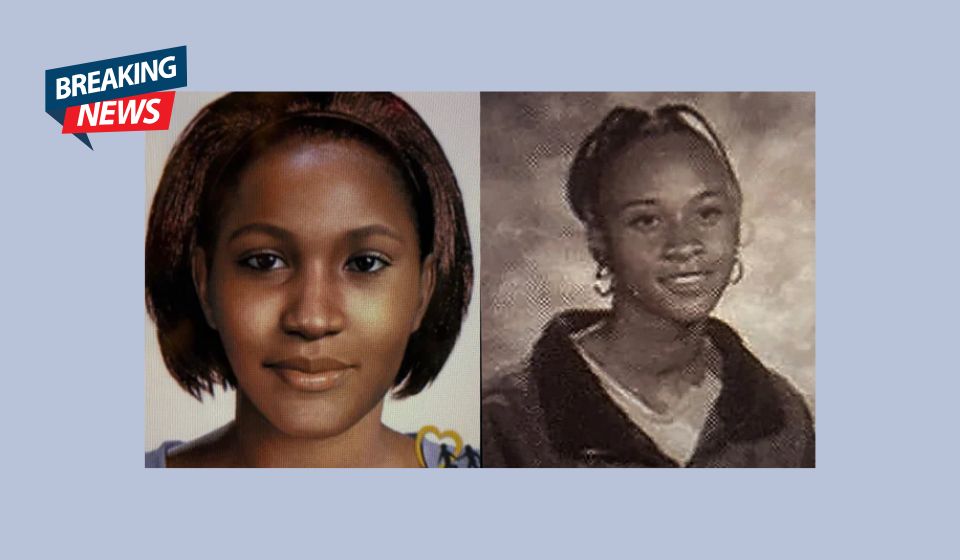
Victim Cut in Half in “Horrifying” Massachusetts Murder 26 Years Ago Finally Identified

More than a quarter-century after a brutally murdered teenage girl was discovered in Massachusetts, investigators have finally identified the victim, bringing long-awaited answers to a family that spent 26 years wondering what happened to their loved one.
Authorities announced that advances in DNA technology and investigative genetic genealogy have confirmed the identity of the victim known for decades as “Chelsea Jane Doe.”
The teenager has now been identified as Tiffany Bradley, a 16-year-old girl from Allentown, Pennsylvania, whose disappearance remained a heartbreaking mystery for more than two decades.
The breakthrough closes one of the most haunting chapters in Massachusetts criminal history and offers a measure of closure to relatives who never stopped searching for answers.
Horrifying Discovery Shocked Investigators
The case began on November 13, 2000, when police made a gruesome discovery near the Chelsea Soldiers’ Home in Massachusetts.
Investigators found the remains of an unidentified young woman abandoned in a parking lot.
Authorities described the crime scene as one of the most disturbing they had ever encountered.
The victim had been brutally dismembered, and critical portions of her remains were missing, making identification extraordinarily difficult.
Without identification documents, fingerprints, or immediate leads, investigators were left with a homicide victim whose name, family, and background remained unknown.
For years, she became known simply as “Chelsea Jane Doe.”
Killer Was Identified Before the Victim
In a twist rarely seen in homicide investigations, authorities identified and convicted the killer long before they learned the victim’s identity.
Investigators eventually connected the murder to Eugene McCollom, who was convicted and sentenced to life in prison for the crime.
According to prosecutors, McCollom later told authorities that additional body parts had been buried at Nahant Beach.
Despite solving the murder itself, investigators continued facing a major unanswered question: Who was the victim?
That mystery persisted for more than two decades.
Officials described the situation as highly unusual because law enforcement knew who committed the crime but could not determine the identity of the person whose life had been taken.
DNA Technology Provides Critical Breakthrough
The breakthrough came through the use of advanced DNA analysis and investigative genetic genealogy.
Over the past several years, these technologies have transformed cold-case investigations across the United States, helping authorities identify previously unknown victims and suspects.
Investigators worked with the FBI to analyze DNA evidence collected from the victim.
Using genetic genealogy techniques, experts were eventually able to locate relatives connected to the unidentified teenager.
The discovery led authorities to Tiffany Bradley’s family in Pennsylvania.
After additional testing and verification, investigators confirmed her identity.
The announcement marked the end of a mystery that had lasted 26 years.
Family Reported Her Missing Decades Ago
Authorities revealed that Bradley’s family had reported her missing around the time she disappeared.
However, because of limited technology available at the time and challenges associated with interstate missing-person investigations, the connection between the Pennsylvania teenager and the Massachusetts homicide was never established.
Investigators now believe Bradley traveled to the Boston area shortly before her death.
Officials suspect she may have become involved in circumstances that placed her at extreme risk.
Law enforcement believes she may have been a victim of human trafficking before her murder.
The exact details surrounding her final days remain under investigation.
A Life Cut Tragically Short
Family members remembered Tiffany Bradley as a bright and energetic teenager with a promising future.
According to relatives, she was active in sports and participated in her school’s basketball program.
She was also involved in ROTC activities and was known for her determination and strong personality.
Loved ones described her as caring, loving, and full of life.
For her family, the years without answers created an emotional burden that never faded.
Each passing year brought more uncertainty and pain as they wondered what happened to the teenager who vanished without explanation.
Final Phone Call Still Haunts Family
During the announcement, relatives shared emotional memories of Bradley’s disappearance.
One family member recalled a final phone conversation shortly before she vanished.
According to relatives, Tiffany’s voice became nervous during the call.
She reportedly told her cousin she would call back later.
That call never came.
Instead, her family spent the next 26 years searching for answers and hoping that one day they would learn the truth.
The emotional impact of that unfinished conversation remained with loved ones throughout the decades-long investigation.
Emotional Closure After Decades of Waiting
The identification announcement brought powerful emotions for family members who had spent years living with uncertainty.
Relatives expressed gratitude toward investigators, forensic experts, and DNA specialists who refused to give up on the case.
For many families of unidentified victims, the greatest pain is often not knowing.
Even when a tragic outcome is confirmed, having answers can provide a sense of closure that had long been impossible.
Family members said they were thankful that Tiffany would finally be known by her name rather than a case number or a placeholder identity.
Importance of Genetic Genealogy
The case highlights the growing importance of investigative genetic genealogy in modern law enforcement.
This technology has helped solve hundreds of cold cases in recent years, including:
- Unidentified homicide victims
- Missing-person investigations
- Long-unsolved murders
- Sexual assault cases
- Unknown human remains discoveries
By comparing DNA evidence with genealogy databases and family connections, investigators can reconstruct family trees and identify individuals even when traditional methods fail.
Experts say Tiffany Bradley’s identification demonstrates the life-changing potential of these scientific advances.
Cold Cases Finding New Life
Across the United States, many cold cases that once seemed unsolvable are being reopened with new forensic techniques.
Cases involving unidentified remains are particularly benefiting from DNA advancements.
For decades, many victims remained nameless because investigators lacked the tools needed to connect them with surviving relatives.
Today, improvements in forensic science are helping restore identities to victims and provide long-awaited answers to families.
Law enforcement officials say Bradley’s case serves as a powerful example of why cold-case investigations should never be abandoned.
Investigation Legacy
Although the murderer was convicted years ago, investigators emphasized that identifying the victim was always a critical objective.
Every homicide victim deserves to have their identity restored and their story told.
Authorities noted that giving Tiffany Bradley her name back represents an important act of justice, even decades after her death.
The identification also allows her family to properly honor her memory and lay her to rest with certainty.
Final Thoughts
Twenty-six years after a horrifying murder shocked Massachusetts investigators, advances in DNA technology have finally revealed the identity of the victim known only as “Chelsea Jane Doe.” Authorities now know she was Tiffany Bradley, a 16-year-old girl from Pennsylvania whose family spent decades searching for answers.
While nothing can undo the tragedy of her death, the breakthrough provides long-awaited closure for loved ones and demonstrates the extraordinary power of modern forensic science. After more than two decades of uncertainty, Tiffany Bradley is no longer an unidentified victim—she is a daughter, a family member, and a young life remembered by name.