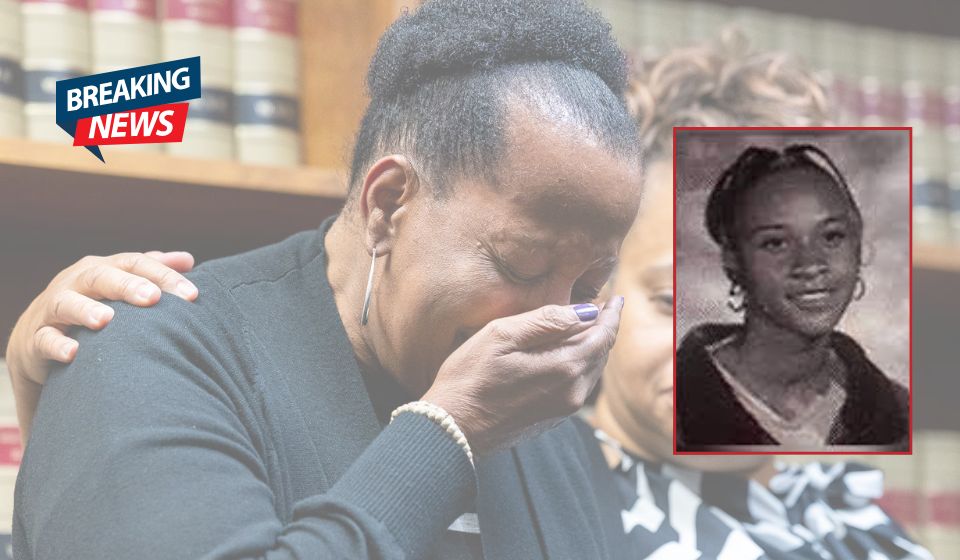
Teen Found Dismembered in Massachusetts Parking Lot 25 Years Ago Finally Identified

BOSTON, Mass. — After nearly 26 years without a name, a teenage girl whose dismembered remains were discovered in a Massachusetts parking lot has finally been identified through advances in DNA technology, bringing long-awaited answers to a case that haunted investigators for decades.
Authorities announced that the victim, long known as “Chelsea Jane Doe,” was Tiffany Bradley, a 16-year-old girl from Allentown, Pennsylvania, who disappeared in November 2000. Her identification marks the end of a years-long effort involving local, state, and federal investigators who refused to let the case go cold.
Horrifying Discovery in Chelsea
The case began on November 13, 2000, when workers made a gruesome discovery in a parking lot at the Soldiers’ Home in Chelsea, Massachusetts. Investigators found the mutilated remains of a young female victim who had been brutally murdered.
According to authorities, the victim’s body had been cut in half, and her head and hands had been removed in an apparent effort to prevent identification. At the time, investigators could determine only basic physical characteristics, including her approximate age, height, and weight. Despite extensive efforts, they were unable to learn who she was.
Because no identification could be made, the victim became known simply as “Chelsea Jane Doe,” a name she would carry for more than two decades.
Killer Identified Years Earlier
While the victim remained unidentified, investigators were able to solve the murder itself relatively quickly.
Authorities determined that a Lynn, Massachusetts, man named Eugene McCollom was responsible for the killing. Investigators linked him to the crime within a year of the discovery. McCollom later confessed to murdering the teenager and led authorities to additional evidence, including locations where some of the victim’s missing body parts had been hidden.
McCollom ultimately pleaded guilty and was sentenced to life in prison. Although the killer had been brought to justice, the victim’s identity remained one of Massachusetts’ most frustrating unsolved mysteries.
Breakthrough Through DNA Technology
The breakthrough came thanks to significant advances in forensic genealogy and DNA analysis.
Investigators worked with the FBI and other agencies to create a genealogical profile using DNA extracted from the victim’s remains. By comparing genetic information with public databases and tracing family connections, investigators eventually located relatives who might be connected to the unidentified victim.
The investigation eventually led authorities to a man living in Texas who was believed to be a biological relative. DNA testing confirmed he was Tiffany Bradley’s brother, providing the final evidence needed to establish her identity. Federal authorities formally confirmed the match earlier this year.
A Missing Teen From Pennsylvania
Investigators revealed that Tiffany Bradley had been reported missing from Allentown, Pennsylvania, on November 8, 2000, just days before her remains were discovered in Massachusetts.
Authorities now believe Bradley had been trafficked from Pennsylvania to the Boston area shortly before her death. Information uncovered during the investigation suggested she arrived in Massachusetts only days before encountering McCollom.
Law enforcement officials described Bradley as a vulnerable teenager who became the victim of exploitation before her tragic death.
During a press conference announcing the identification, officials emphasized that Bradley’s story highlights the dangers faced by young trafficking victims and the importance of continued efforts to combat human trafficking.
Family Finally Gets Answers
For Bradley’s family, the identification ends nearly 26 years of uncertainty and heartbreak.
Relatives attended the announcement and spoke emotionally about the teenager they remembered. Family members described Tiffany as energetic, athletic, creative, and full of life. She enjoyed drawing, dancing, sports, and spending time with her siblings.
For years, relatives searched for answers and held onto hope that she might still be alive. Some family members believed she could have left the country, while others continued to push for information about her disappearance. The confirmation of her identity brought both sadness and relief.
One family member described the identification as a miracle, expressing gratitude that Tiffany was no longer an anonymous victim and could finally be returned to her family with her name restored.
Why the Identification Matters
Officials stressed that solving a crime does not end with the conviction of a killer. Identifying victims is an essential part of delivering justice and providing closure to families.
Investigators credited decades of persistence, cooperation among multiple law enforcement agencies, and advances in forensic science for finally solving the mystery of Chelsea Jane Doe’s identity. They noted that while technology played a major role, the breakthrough would not have happened without years of dedication from detectives who continued working the case long after the murder had been solved.
Today, Tiffany Bradley is no longer known as Chelsea Jane Doe. After nearly 26 years, she has her name back, and her family finally has answers about what happened to the teenager they never stopped searching for.