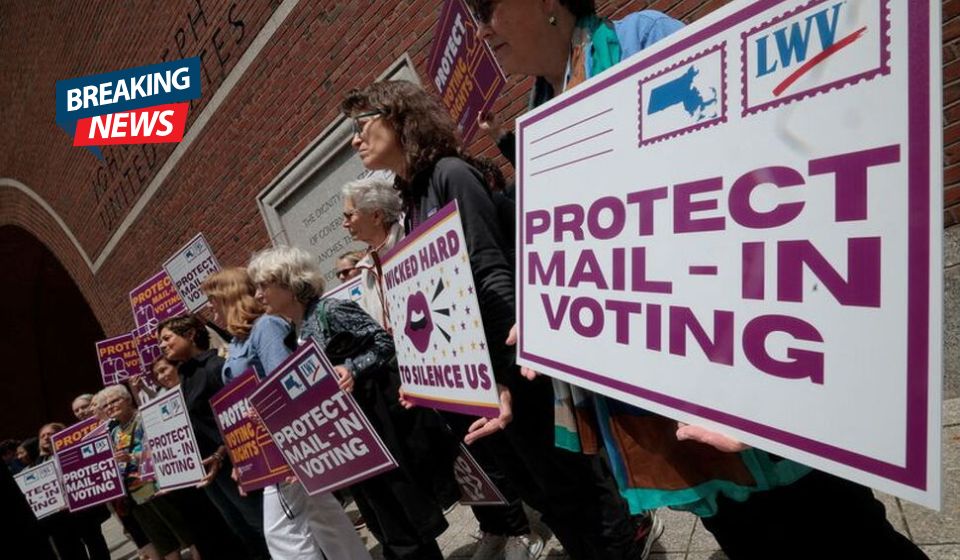
Boston Judge Takes Up High-Stakes Case Against Trump Voting Order

A closely watched legal battle over voting rights and election administration is unfolding in a Boston federal courtroom, where a judge is weighing whether to block a controversial executive order issued by President Donald Trump that would significantly change how mail-in voting is handled across the United States.
The case has quickly become one of the most consequential election-related lawsuits of the year, with implications that could reach far beyond Massachusetts and potentially influence how millions of Americans vote in future federal elections.
At the center of the dispute is a presidential order designed to tighten rules surrounding mail-in ballots, voter eligibility verification, and federal oversight of election administration. Supporters argue the changes are necessary to strengthen election integrity, while opponents contend the measures could create confusion, discourage voter participation, and infringe upon states’ constitutional authority to run elections.
As legal arguments continue, election officials, voting rights advocates, political leaders, and voters nationwide are watching closely.
Why the Case Matters
The lawsuit arrives at a critical moment for American democracy.
With congressional elections approaching, any significant changes to voting procedures could affect how ballots are distributed, verified, and counted across the country.
The legal challenge was brought by a coalition of Democratic-led states and voting rights organizations that argue the executive order exceeds presidential authority and interferes with powers traditionally reserved for states.
The outcome could influence not only upcoming elections but also the broader balance of power between federal and state governments in election administration.
Many legal experts believe the case may ultimately reach higher courts and potentially the nation’s highest judicial authority before a final resolution is reached.
What the Executive Order Would Do
The executive order seeks to introduce several changes to election procedures, particularly those involving mail-in voting.
Among its most debated provisions is a directive requiring federal agencies to compile information that could be used to identify citizens eligible to vote.
The order also seeks to establish new processes related to the distribution and handling of mail ballots.
Supporters of the proposal argue that these measures would help ensure that only eligible voters receive ballots and participate in federal elections.
They contend that stronger verification systems would increase public confidence in election outcomes and reduce opportunities for fraud.
Critics, however, argue that implementing such systems could be far more complicated than it appears.
Judge Raises Concerns During Hearing
During the court proceedings, the federal judge overseeing the case expressed skepticism about certain aspects of the executive order.
One of the judge’s primary concerns involved the practicality of creating a comprehensive federal list of eligible voters.
Questions were raised about whether any federal database could accurately identify every eligible voter in the country while simultaneously avoiding errors and protecting privacy rights.
Election systems in the United States are largely decentralized, with voter registration and election administration typically managed at the state and local levels.
Because of this structure, assembling a complete and accurate nationwide voter database presents significant logistical challenges.
The judge suggested that even minor inaccuracies could potentially affect eligible voters who may not appear on federal lists despite having the legal right to vote.
The Debate Over Federal Authority
One of the central issues in the lawsuit involves constitutional authority.
Under the U.S. Constitution, states have historically played the primary role in administering elections.
State governments oversee voter registration, polling locations, ballot distribution, and election certification procedures.
Opponents of the executive order argue that the federal government cannot unilaterally impose new election administration requirements without congressional authorization.
They claim the order attempts to shift authority away from states and toward federal agencies.
Supporters of the administration disagree.
They argue that federal officials have a legitimate interest in protecting election integrity and ensuring compliance with federal voting laws.
The legal dispute ultimately revolves around where the limits of presidential authority begin and end.
Concerns About Voter Access
Voting rights organizations involved in the lawsuit warn that the proposed changes could unintentionally prevent eligible citizens from voting.
Their primary concern centers on the possibility that federal voter eligibility databases may contain incomplete or outdated information.
If election officials rely too heavily on federal records, some eligible voters could encounter difficulties obtaining ballots or verifying their registration status.
Advocates argue that such complications could discourage participation, particularly among communities that already face barriers to voting.
Election law experts note that even small administrative errors can have significant consequences when applied across millions of voters nationwide.
As a result, critics say any new verification requirements must be carefully evaluated before implementation.
Potential Impact on Election Officials
The lawsuit also highlights concerns among state and local election administrators.
Many election officials are responsible for processing voter registrations, distributing ballots, and ensuring compliance with both state and federal laws.
Some provisions of the executive order could create uncertainty about their responsibilities.
Critics argue that increased federal oversight and the possibility of investigations could place additional pressure on election workers who are already managing complex election systems.
Election administrators across the country have repeatedly emphasized the importance of clear rules and consistent guidance, especially during major election cycles.
Confusion surrounding new requirements could complicate preparations for future elections.
Supporters Defend Election Integrity Measures
While critics have dominated much of the public discussion, supporters of the executive order argue that stronger safeguards are necessary.
They maintain that voters deserve confidence that election systems accurately verify eligibility and protect against potential abuses.
Advocates of stricter election rules often point to public concerns about election security and argue that improved verification procedures can strengthen trust in democratic institutions.
They believe federal agencies can play a constructive role in supporting states and improving election administration.
Supporters also argue that waiting until after problems emerge is not an effective strategy and that proactive measures are preferable to reactive reforms.
The debate reflects broader national disagreements over how best to balance election access with election security.
Why Mail-In Voting Remains a Political Flashpoint
Mail-in voting has become one of the most debated topics in American politics over the past several election cycles.
Supporters argue that mail voting increases accessibility by allowing eligible citizens to participate without traveling to polling locations.
This can be particularly beneficial for:
- Military personnel
- Senior citizens
- Individuals with disabilities
- Rural voters
- People with demanding work schedules
Opponents, meanwhile, argue that mail voting requires strong safeguards to ensure ballots are distributed and returned securely.
The ongoing legal battle highlights the continuing political and legal disagreements surrounding these issues.
A Case With National Implications
Although the lawsuit is being heard in Boston, its effects could extend nationwide.
The case involves questions about:
- Presidential authority
- State election powers
- Voter access
- Election security
- Federal agency involvement
- Constitutional interpretation
Legal analysts believe the decision could influence future disputes involving election administration and voting rights.
Because federal elections affect every state, any court ruling could have broad implications for election procedures across the country.
Possible Path to the Supreme Court
Many observers expect the case may not end with a district court ruling.
Given the constitutional questions involved and the political significance of the dispute, appeals are widely anticipated regardless of the initial outcome.
Cases involving election administration frequently move through multiple levels of the federal court system before reaching a final resolution.
If conflicting decisions emerge from different courts, the issue could eventually be reviewed by the U.S. Supreme Court.
Such a development would place the nation’s highest court at the center of another major election-related controversy.
What Happens Next?
For now, the federal judge must decide whether to temporarily block implementation of portions of the executive order while the broader legal challenge proceeds.
A temporary ruling would not necessarily determine the final outcome of the case but could significantly influence election preparations in the coming months.
Election officials, state governments, advocacy organizations, and federal agencies are all awaiting the court’s decision.
Because election calendars continue moving forward, time remains an important factor.
Any delay in resolving the legal questions could complicate planning efforts ahead of future elections.
Final Thoughts
The legal challenge to President Trump’s voting executive order represents a pivotal moment in the ongoing debate over election administration in the United States. At stake are fundamental questions about who controls federal election procedures, how voter eligibility should be verified, and whether new mail-in voting restrictions could affect access to the ballot box.
As the Boston court considers the arguments presented by both sides, the case has already become one of the most important election-related legal battles of the year. With potential consequences for voters, election officials, and governments nationwide, the final outcome could help define the future of mail-in voting and federal election oversight for years to come.