Delta crew aborts landing at Boston Logan, FAA probing incident

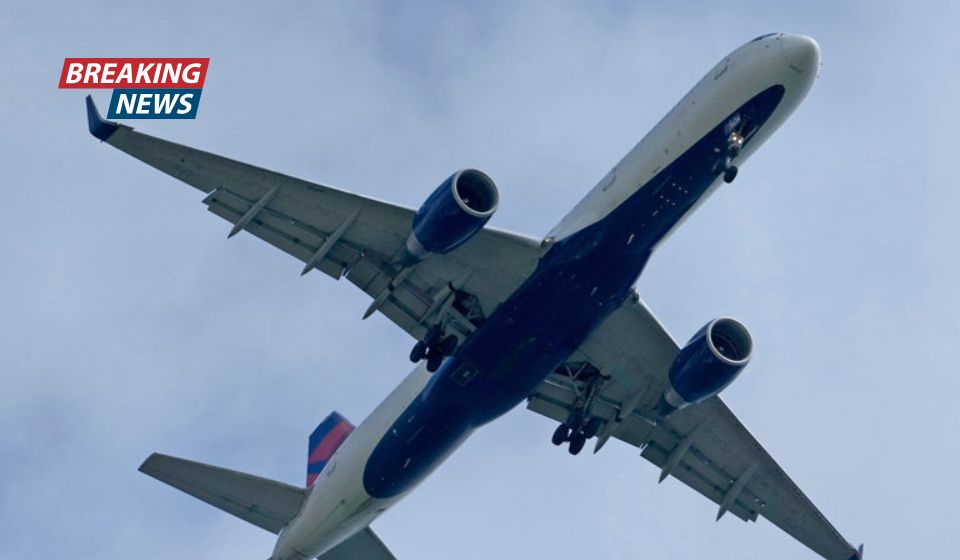
A Delta Air Lines flight was forced to abort its landing at Boston Logan International Airport after a potential runway conflict involving another commercial aircraft, prompting an investigation by the Federal Aviation Administration (FAA). The incident occurred on Saturday morning and has renewed attention on aviation safety and air traffic control operations at one of the nation’s busiest airports.
Details of the Incident
According to the FAA, Delta Air Lines Flight 2351 was arriving at Boston Logan International Airport from Dallas when the crew was instructed to perform a go-around, a standard aviation maneuver in which an aircraft aborts its landing approach and climbs away from the runway before attempting another landing.
The maneuver became necessary because an American Airlines aircraft was departing from an intersecting runway at the same time the Delta jet was approaching to land. FAA officials said the two aircraft were in a situation that required immediate action to maintain safe separation and prevent a potential collision.
Flight Information
Delta Flight 2351 was carrying 129 passengers and six crew members at the time of the incident. Airline officials stated that the flight crew coordinated with air traffic controllers and safely executed the go-around procedure. After circling and repositioning for another approach, the aircraft landed safely at Boston Logan without further problems. Passengers deplaned normally and no injuries were reported.
FAA Launches Investigation
The FAA confirmed that it has opened an investigation into the incident to determine exactly how the runway conflict developed and whether any procedural issues contributed to the close call. The agency has not yet released preliminary findings or indicated whether air traffic control instructions, pilot actions, or other factors played a role.
American Airlines and airport officials referred questions regarding the event to the FAA, which is leading the investigation.
Understanding a Go-Around Procedure
A go-around is considered a routine and safe maneuver in commercial aviation. Pilots may perform a go-around for a variety of reasons, including unstable approaches, poor weather conditions, runway obstructions, aircraft spacing concerns, or instructions from air traffic controllers. The FAA emphasizes that go-arounds are a normal part of flight operations and are designed to maximize safety whenever a landing cannot be completed under ideal conditions.
In this case, the Delta crew followed established safety procedures and successfully executed the maneuver before returning for a safe landing.
Boston Logan’s History of Similar Runway Safety Concerns
The latest incident is not the first time Boston Logan International Airport has experienced a runway-related close call. The airport has been the site of several recent investigations involving aircraft separation concerns and runway operations. Aviation experts have frequently pointed to the complexity of Logan’s intersecting runway layout, which can create challenging situations for both pilots and air traffic controllers when traffic volumes are high.
In a separate incident investigated by federal authorities, another Delta aircraft was required to perform a last-minute go-around at Logan after another airplane was cleared for takeoff from an intersecting runway. That event also led to scrutiny of air traffic control procedures and runway coordination.
Aviation Experts Stress Importance of Separation Standards
Aviation safety specialists note that modern air traffic systems are built with multiple layers of protection designed to prevent aircraft collisions. Even when aircraft come closer than desired, pilots and controllers have established procedures to restore safe separation quickly. The successful execution of a go-around demonstrates one of those safety layers in action.
Experts emphasize that an investigation will focus on determining whether required separation standards were maintained and whether any operational adjustments are necessary to reduce the likelihood of similar incidents in the future.
Incident Occurs Amid Increased Focus on Aviation Safety
The Boston Logan close call comes during a period of heightened public attention on aviation safety following several recent aircraft accidents and incidents across the United States and internationally. Recent crashes and emergency events have prompted renewed discussion about air traffic control staffing, pilot training, runway safety technologies, and overall aviation oversight.
While the Delta incident ended safely, it adds to a growing list of events that federal investigators are examining as regulators continue efforts to strengthen safety systems throughout the aviation industry.
What Happens Next
The FAA’s investigation will likely include reviews of radar data, communications between pilots and air traffic controllers, flight tracking information, and airport operational procedures. Investigators will seek to determine exactly how the aircraft came into conflict and whether any corrective measures are warranted.
For now, officials have confirmed that the Delta aircraft landed safely, no passengers or crew members were injured, and normal airport operations resumed following the incident. The FAA has not announced a timeline for completing its investigation.