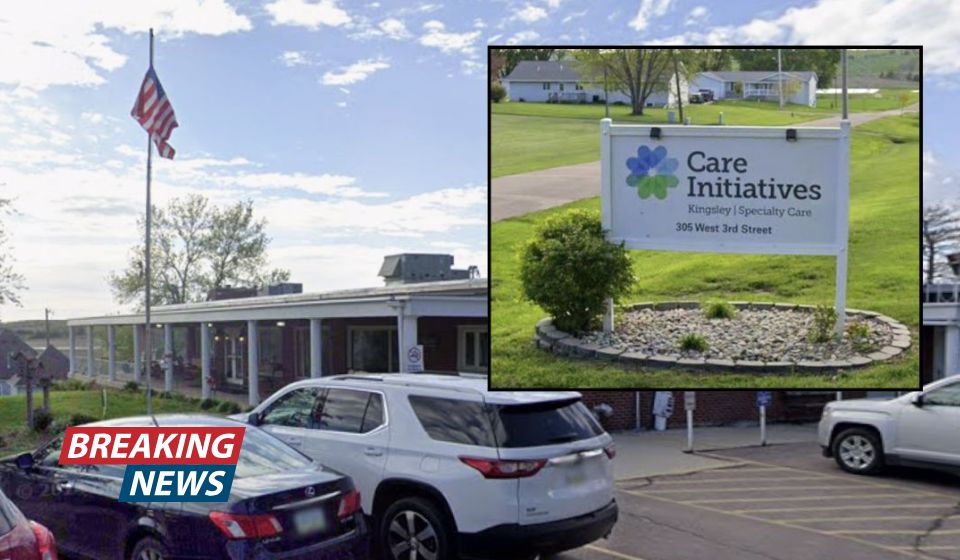
Nursing home patient with breathing problems died after ‘panicked’ nurse ran to basement instead of performing CPR: State

A nursing home in Iowa is facing state penalties after investigators concluded that a resident died when staff failed to provide timely lifesaving care during a medical emergency. State records indicate that a nurse became flustered during the incident, left the patient’s room in search of oxygen equipment parts, and failed to initiate CPR after the resident became unresponsive. The case has raised serious concerns about emergency preparedness and staff response procedures at long-term care facilities.
Iowa Nursing Home Hit With State Fine
According to findings from the Iowa Department of Inspections, Appeals and Licensing, Kingsley Specialty Care, a nursing home located in Kingsley, Iowa, was assessed a $10,500 state fine following the death of a female resident who experienced breathing difficulties and did not receive prompt cardiopulmonary resuscitation (CPR).
The penalty was issued after investigators determined that staff failed to provide basic emergency care to the resident. State officials found that the nursing home’s response to the crisis fell below required standards and contributed to the fatal outcome.
The woman’s identity and age were not publicly disclosed in state records.
Resident Reportedly Requested Hospital Care
The incident occurred on May 9, 2026. According to inspection records, the resident informed staff that she was having difficulty breathing and wanted to be transported to a hospital.
Staff members attempted to obtain her vital signs, but investigators noted that the readings could not be obtained. As the resident’s condition worsened, a registered nurse sought to provide oxygen support.
Nurse Could Not Locate Working Oxygen Equipment
The nurse later told investigators that she attempted to assemble an oxygen-delivery device but was unable to find all of the necessary working parts.
Instead of remaining with the patient and initiating emergency measures, the nurse went to the facility’s basement to search for the missing equipment components.
While the nurse was away, the patient’s condition rapidly deteriorated.
Patient Became Unresponsive While Nurse Was Away
A nurse aide remained in the resident’s room and observed that her breathing had slowed significantly.
According to inspection records, the resident eventually became unresponsive.
The aide reportedly attempted multiple times to contact the registered nurse by radio and call her back to the room. Investigators stated that the aide said the nurse did not respond to those attempts.
Eventually, the aide had to yell in order to get the nurse’s attention and bring her back to the patient’s bedside.
Confusion Over Resuscitation Status
When the nurse returned, neither she nor the aide immediately knew whether the resident had a do-not-resuscitate order in place.
The two reportedly went to the nurses’ station to verify the patient’s code status.
Records showed the resident was designated as a “full-code” patient, meaning staff were required to initiate lifesaving interventions, including CPR, if she stopped breathing or lost consciousness.
By the time that determination was made, the resident remained unresponsive.
CPR Was Not Immediately Performed
After confirming the patient’s code status, staff returned to the room.
Investigators found that a nurse aide began chest compressions while another aide called 911 for emergency assistance.
The registered nurse checked for a pulse and reportedly stated that the patient “was gone.”
State investigators concluded that the nurse herself did not perform any lifesaving measures despite being the licensed professional expected to lead the emergency response.
Aide Said Nurse Appeared Shocked
During interviews with inspectors, the nurse aide stated that she expected the registered nurse to take charge of the situation.
Instead, the aide described the nurse as appearing stunned and unable to act.
According to inspection documents, the aide said the nurse “kind of acted like she was in shock.”
The registered nurse later acknowledged to investigators that she had become “flustered” during the emergency.
She also admitted that she did not think to retrieve the facility’s crash cart, which contained emergency equipment that could have been used during the resuscitation effort.
EMTs Arrived To Find No CPR Underway
Emergency medical technicians arrived approximately 10 minutes after the 911 call was placed.
When they entered the resident’s room, EMTs observed an employee believed to be a nurse standing at the foot of the bed.
One EMT reportedly asked why no one was performing CPR on the patient.
According to inspection records, the employee responded that she was “giving her some air.”
Emergency Equipment Was Missing From The Room
EMTs told investigators they did not see critical emergency equipment in the room.
Specifically, they reported that there was no crash cart present, no bottled oxygen available, and no Ambu bag—a manual resuscitation device commonly used to assist breathing during medical emergencies.
Investigators later learned that a crash cart equipped with oxygen and an Ambu bag was located near the nurses’ station.
However, the nursing home’s director of nursing reportedly could not confirm whether the cart had ever been used during the resident’s emergency.
Resident Was Transported To Hospital
After arriving at the facility, emergency responders began CPR and continued resuscitation efforts.
The resident was then transported to a hospital for further treatment.
Despite those efforts, she was later pronounced dead.
State investigators determined that the nursing home failed to provide the basic CPR measures expected in such circumstances, including maintaining an airway, providing rescue breathing when necessary, and administering chest compressions.
State Investigation Findings
The Iowa Department of Inspections, Appeals and Licensing cited the nursing home for failing to provide adequate emergency care to the resident.
Investigators concluded that staff did not respond appropriately once the patient became unresponsive and that required lifesaving interventions were delayed or not performed at all.
The state’s $10,500 penalty was issued partly because of the CPR-related violation. Records indicate the fine also included a separate violation involving allegations that a nurse had taken a patient’s medication.
Potential Additional Federal Action
According to reports, Iowa typically suspends collection of state-imposed fines while federal regulators determine whether they will pursue additional sanctions.
As a result, further regulatory action could still be possible depending on the outcome of any federal review.
Questions Raised About Emergency Preparedness
The incident has sparked renewed scrutiny of nursing home emergency response procedures, particularly regarding staff training, access to lifesaving equipment, and the ability of personnel to respond effectively under pressure.
Investigators’ findings suggest that confusion over equipment, uncertainty regarding code status, delayed communication, and a lack of immediate CPR all played roles in the response to the resident’s medical crisis.
The case remains a stark example of how critical minutes during a medical emergency can determine whether a patient survives, and why healthcare facilities are expected to have trained staff and readily accessible emergency equipment available at all times.