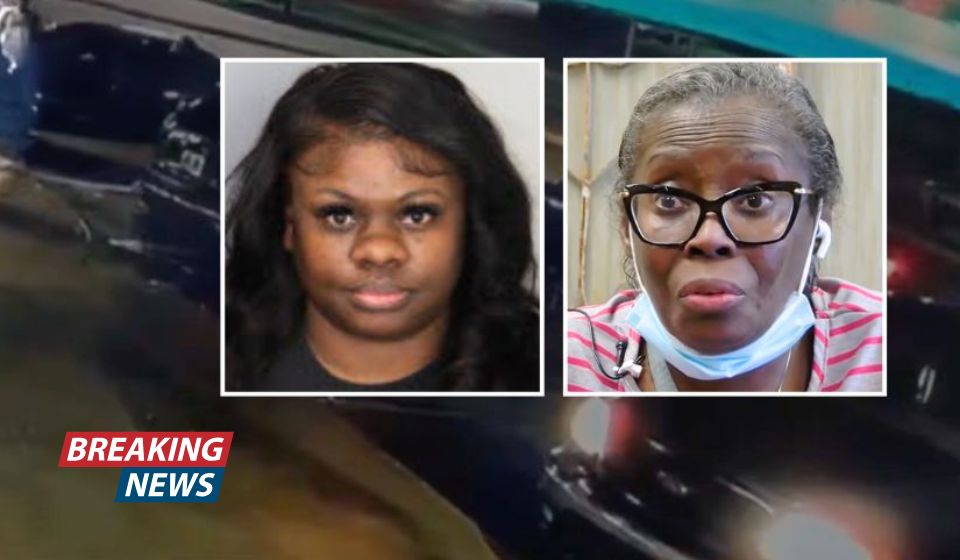
‘Like she was worthless’: Woman gunned down 60-year-old crime activist at strip mall, shooting her in the face and neck before leaving her to die

A woman has been found guilty in the fatal shooting of a respected 60-year-old community activist who dedicated decades of her life to fighting crime, blight, and neighborhood neglect in Memphis. The conviction brings a measure of closure to a case that shocked residents and left a lasting impact on the community she served.
The victim, Dr. Yvonne Nelson, was a well-known activist, philanthropist, and community leader who spent more than 30 years working to improve neighborhoods throughout Memphis. Prosecutors said she was gunned down during a confrontation that escalated into deadly violence, ultimately leaving her with fatal gunshot wounds.
Jury Finds Tifanee Wright Guilty
In April 2026, a Shelby County jury found Tifanee Wright guilty of second-degree murder in the killing of Dr. Nelson. The verdict came after prosecutors presented surveillance footage and digital evidence that they said clearly connected Wright to the shooting.
Following the guilty verdict, Wright was immediately taken into custody. She faces a prison sentence ranging from 15 to 25 years without probation or parole under Tennessee law. Prosecutors described the conviction as an important step toward justice for Nelson’s family and the wider Memphis community.
The trial marked the culmination of a case that had been closely followed since the fatal shooting occurred in August 2022.
The Deadly Encounter at a Strip Mall
The shooting took place on Yale Road in Memphis near a shopping center and strip mall area where Nelson and Wright met. According to investigators, the confrontation stemmed from a dispute involving money.
Evidence presented in court showed that the two women knew each other before the incident. Authorities later determined that the shooting was not a random act of violence and was not a carjacking, despite initial speculation after the killing.
Surveillance footage captured portions of the encounter. Prosecutors said the footage showed a tense exchange between the women before gunfire erupted.
Investigators reported that multiple shots were fired during the confrontation. Nelson suffered gunshot wounds to her head and neck area and died from her injuries.
Family Describes a Brutal and Senseless Death
The victim’s family spoke publicly following the shooting, expressing grief and disbelief over the violent manner in which Nelson lost her life.
Her daughter, Iman Mason, repeatedly emphasized that her mother was unarmed and did not deserve to die. Family members said Nelson had spent her life helping others and working to make Memphis neighborhoods safer.
In emotional statements after the killing, relatives described the shooting as a senseless act that robbed the community of one of its strongest advocates. They said Nelson was left critically wounded and never received the help she desperately needed.
The circumstances surrounding the shooting led many supporters to express outrage, with some describing the way Nelson was treated as if “she was worthless,” a characterization that underscored the family’s pain and frustration over the loss.
Investigators Uncover Motive
Police investigators determined that the shooting grew out of an argument over money.
Court testimony revealed that the dispute involved a financial disagreement between Nelson and Wright. Evidence presented during legal proceedings indicated that the conflict escalated during their face-to-face meeting.
Detectives reviewed surveillance footage from multiple angles and interviewed witnesses as they reconstructed the events leading up to the shooting.
Authorities ultimately concluded that the deadly confrontation was the result of a personal dispute rather than a random attack.
Arrest and Criminal Charges
Following the shooting, Memphis police identified Wright as the primary suspect.
A warrant was issued for her arrest, and U.S. Marshals later located her at a residence in Memphis. Authorities reported that the home’s entrance had been barricaded, but Wright was eventually taken into custody without further incident.
She was initially charged with second-degree murder.
The arrest brought some relief to Nelson’s family, who had been pleading for answers and justice in the days following the killing.
Defense Claimed Self-Defense
Throughout the legal proceedings, Wright maintained that she acted in self-defense.
Defense attorneys argued that surveillance footage showed Nelson approaching Wright during the confrontation. They claimed Wright feared for her safety and fired warning shots before ultimately shooting Nelson.
At one stage of the case, a judge reduced the charge from second-degree murder to voluntary manslaughter after hearing preliminary evidence and arguments from both sides.
Defense attorneys continued to insist that Nelson had been the aggressor and argued that Wright had acted out of fear.
However, prosecutors strongly disputed that interpretation and maintained that the evidence supported a murder conviction.
Prosecutors Present Video and Digital Evidence
During the trial, prosecutors relied heavily on surveillance video and digital records.
The state argued that the footage demonstrated Wright’s actions before, during, and after the shooting. Investigators also used digital evidence to establish connections between the two women and the events surrounding the dispute.
Prosecutors emphasized that Nelson was unarmed and that Wright failed to render aid after the shooting.
The jury ultimately sided with the prosecution’s version of events and returned a guilty verdict for second-degree murder.
Who Was Dr. Yvonne Nelson?
The loss of Dr. Nelson resonated deeply throughout Memphis because of the extraordinary role she played in the community.
A graduate of LeMoyne-Owen College who later earned a doctorate from Capella University, Nelson devoted much of her life to civic engagement and neighborhood improvement.
She served as president of the Whitehaven Community Development Corporation for approximately 25 years and became one of the city’s most recognizable voices on community issues.
Nelson also served as a commissioner with the Memphis City Beautiful Commission and worked with numerous nonprofit organizations.
Her activism focused on addressing illegal dumping, neighborhood blight, youth development, beautification efforts, and other issues affecting local residents.
A Lifetime of Service
Friends, colleagues, and former students remembered Nelson as a tireless advocate who consistently put community needs above her own.
She worked with organizations including the YMCA of Memphis and the Mid-South, Memphis Public Libraries, the U.S. Census Bureau, and other civic groups.
Nelson also authored work focused on youth intervention and development programs and spent years mentoring young people throughout the city.
Many community leaders described her as someone who believed education, engagement, and opportunity were key to reducing crime and improving neighborhoods.
Just before her death, Nelson was continuing her activism and community outreach efforts.
Community Mourns the Loss
The killing sent shockwaves through Memphis, particularly in Whitehaven and other neighborhoods where Nelson’s influence was widely felt.
Community members gathered to honor her memory and called for accountability in the case.
Those who knew her said her legacy would continue through the countless individuals she mentored and inspired over the years.
Many residents remembered Nelson as a woman who never stopped fighting for better neighborhoods and safer communities, even when those efforts brought challenges and opposition.
Verdict Brings Closure but Not an End to the Pain
Although the guilty verdict brought a sense of justice to many who knew Nelson, family members acknowledged that no court decision could fully heal the loss.
The conviction marked the end of a lengthy legal process that stretched nearly four years after the shooting.
Supporters said the verdict affirmed the value of Nelson’s life and the importance of holding those responsible for violent crimes accountable.
As Memphis continues to remember Dr. Yvonne Nelson, her legacy remains rooted in decades of service, advocacy, and dedication to the community she loved. Her work transformed neighborhoods, empowered residents, and left a lasting imprint that supporters say will endure long after her tragic death.