Man brutally murdered sleeping 90-year-old who owned convenience store for decades by repeatedly stabbing him in the stomach with a screwdriver: Cops

For decades, 90-year-old Francisco Chura was a familiar and respected figure in his Houston neighborhood. The elderly businessman owned and operated a convenience store that had become a fixture in the community, serving generations of local residents. But authorities say his long life and years of service ended in a horrifying act of violence when a man allegedly broke into his home, attacked him as he slept, and repeatedly stabbed him with a screwdriver during what investigators believe was a robbery.
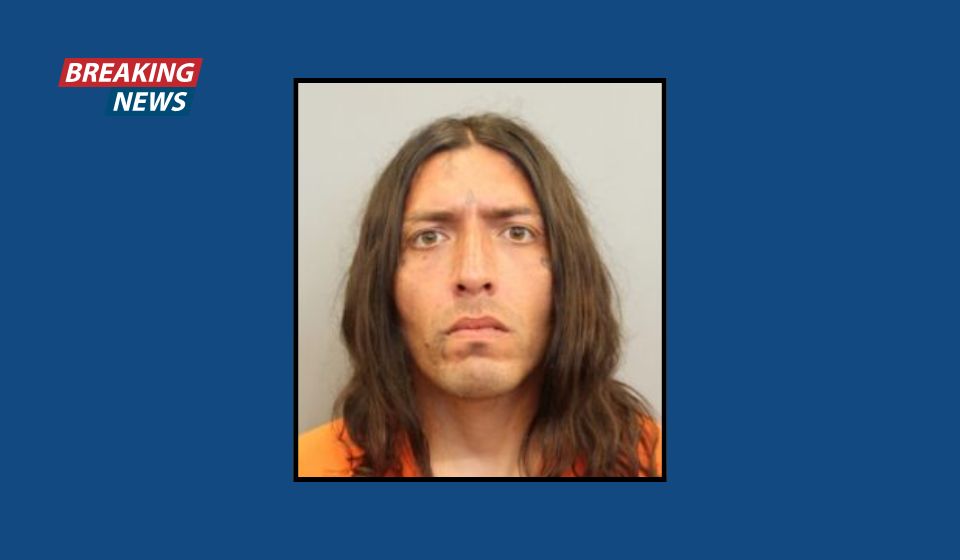
Police have charged 34-year-old Anthony Cerda with capital murder in connection with Chura’s death, a case that remained unsolved for months before DNA evidence and witness statements allegedly linked him to the brutal crime. According to investigators, the attack was so severe that Chura suffered multiple stab wounds and ultimately died from his injuries weeks later.
Elderly Store Owner Attacked While Sleeping
According to Houston police and court documents, the attack occurred on August 20, 2025, at Chura’s property in the 7800 block of Canal Street in Houston, Texas. The elderly victim lived in a residence attached to the convenience store he had owned and operated for decades.
Investigators say Cerda allegedly gained entry into the home by removing an air-conditioning unit from a window. Once inside, authorities allege he entered the sleeping victim’s room and launched a vicious assault.
Court records state that Chura was asleep when the suspect allegedly jumped on top of him, repeatedly punched him, and stabbed him numerous times in the stomach and body using a screwdriver. Detectives later documented several small circular puncture wounds consistent with a screwdriver attack. Blood-soaked bedding discovered at the scene underscored the violence of the encounter.
Victim Pretended to Be Dead to Survive
Despite suffering devastating injuries, Chura managed to survive the initial assault.
According to the probable cause affidavit, the elderly store owner later told investigators that he pretended to be dead while the attack was taking place. He reportedly remained motionless until the assailant fled the residence.
After the suspect left, Chura allegedly hid in a bathroom for several hours. When daylight arrived, he left the house and went to a neighbor’s residence seeking help. His actions likely saved his life temporarily, allowing emergency responders to transport him to a hospital for treatment.
Investigators Suspected Robbery Motive
When officers examined the crime scene, they discovered evidence suggesting the attack may have been motivated by theft.
Police found a safe inside the residence standing open and apparently empty. According to Chura, approximately $3,000 in cash had been stored inside the safe before the attack. The money was missing after the incident.
Investigators also recovered a bent screwdriver stained with blood, believed to be the weapon used during the assault. The discovery would later become one of the most important pieces of evidence in the case.
Francisco Chura Succumbed to His Injuries
Although Chura survived the initial assault and was rushed to a hospital, his injuries proved too severe.
Authorities said he remained hospitalized for more than two weeks before dying on September 7, 2025. His death transformed the investigation into a homicide case.
For neighbors who had known him for years, the loss was devastating. Residents described Chura as a kind and generous man who frequently helped people in the community. Many were shocked that someone so well-known and respected could become the victim of such a brutal crime.
Detectives Begin Following Leads
During the investigation, Chura reportedly provided detectives with a description of his attacker, saying the suspect had long hair.
Months later, investigators reportedly spotted a long-haired man hiding inside a crawl space at a residence located near the crime scene. According to court documents, the individual appeared to be attempting to avoid police attention.
The homeowner identified the man as her nephew, Anthony Cerda. She told investigators that Cerda occasionally stayed at her home when he needed a place to live. She also revealed that he was familiar with Chura and frequently visited the convenience store. According to her statement, Chura had even loaned Cerda money on occasion. She said Cerda had been inside the store shortly before the homicide occurred.
Witness Recounts Suspicious Encounter Before Attack
Another witness provided investigators with information about an encounter that occurred shortly before the assault.
According to police, the witness visited the convenience store on the night before the attack but found the door locked. Chura eventually allowed him inside and allegedly spoke about a troubling interaction involving a man who had previously received money from him.
The witness told investigators that Chura said the man returned and demanded additional cash. Chura reportedly refused and forced the individual to leave. When asked to identify the person, Chura declined to provide a name. Detectives later considered this information significant as they worked to establish a motive and identify a suspect.
Alleged Confession Emerges
The investigation gained additional momentum in January 2026 when detectives interviewed a man who claimed to have spoken with Cerda after the crime.
According to court records, the witness told police that he and Cerda had been spending time together and using drugs when Cerda allegedly made a shocking statement.
The witness reported that Cerda said, “I killed Pancho,” referring to Francisco Chura by his nickname. Investigators viewed the statement as a potentially critical piece of evidence linking Cerda to the homicide.
DNA Evidence Provides Major Breakthrough
The most significant development in the case came when forensic testing results were returned.
Authorities submitted the blood-stained screwdriver recovered from the crime scene for DNA analysis. According to investigators, laboratory testing determined that DNA from two individuals was present on the weapon.
Those individuals were identified as Francisco Chura and Anthony Cerda.
The DNA findings provided investigators with powerful forensic evidence and ultimately led authorities to seek an arrest warrant. Police described the results as the breakthrough that finally connected Cerda to the fatal attack.
Anthony Cerda Charged With Capital Murder
Following the DNA results and months of investigation, police obtained a warrant charging Cerda with capital murder.
Authorities arrested him while he was already being held in the Harris County Jail on an unrelated charge. Court records indicate he was scheduled to make an initial court appearance shortly after the warrant was issued.
Prior to the arrest, Cerda had reportedly denied involvement in the crime and told detectives that he had never been inside Chura’s store. Investigators, however, said witness statements, forensic evidence, and other findings contradicted those claims.
Community Mourns a Beloved Business Owner
The killing left a profound impact on the Houston neighborhood where Chura had spent decades serving customers.
Neighbors described him as a beloved local figure whose store had become part of the community’s identity. Residents recalled his willingness to help people in need and expressed disbelief that he had been targeted in such a violent manner.
One neighbor told local media that “everybody grew up with him” and that the entire community was stunned by what happened. For many, Chura’s death represented the loss of a longtime friend as much as a local businessman.
Ongoing Legal Proceedings
As the criminal case moves through the courts, prosecutors will seek to prove that Cerda intentionally killed Francisco Chura during the course of a robbery, a circumstance that supports the capital murder charge under Texas law.
The prosecution is expected to rely heavily on forensic evidence, witness testimony, the alleged confession, and the circumstances surrounding the break-in and theft. Defense attorneys will have the opportunity to challenge the evidence during future court proceedings.
The case remains a tragic reminder of how a respected 90-year-old store owner who spent decades serving his community became the victim of a violent attack that authorities say was motivated by greed and ended with his death weeks later.