Man fuming over grass clippings and dirt on his car furiously blows away landscaper who offered to fix it

A routine landscaping job in Ohio turned into a deadly confrontation when a man became enraged over grass clippings and dirt that had landed on his vehicle. What began as a minor dispute quickly escalated into gun violence, resulting in the death of a young landscaper who had reportedly offered to correct the problem. The shocking case has drawn widespread attention and ended with a lengthy prison sentence for the shooter.
Deadly Dispute Erupts During Landscaping Job
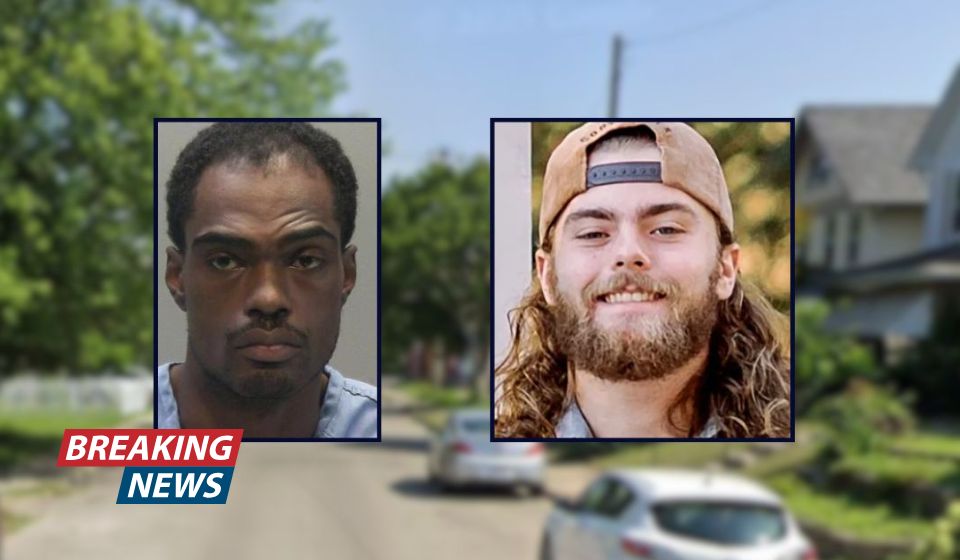
The incident occurred on September 18, 2025, on the first block of Indiana Avenue in Dayton, Ohio. Twenty-two-year-old Tanner Staggs was working as part of a landscaping crew employed by Dunham’s Lawn Care LLC when the confrontation began. According to investigators, Staggs and his coworkers were performing routine lawn maintenance in the neighborhood when grass clippings and dirt allegedly landed on a nearby vehicle.
Witnesses told police that 36-year-old Travis Jackson came out of a nearby residence and began arguing with Staggs about the debris that had gotten onto his car. The disagreement centered on the grass clippings and mud that Jackson believed had been blown onto the vehicle during the landscaping work.
Landscapers Attempted to Resolve the Situation
According to court records and witness testimony, the landscaping crew attempted to calm the situation. Witnesses said Jackson was informed that the workers would use a blower to remove the grass clippings from his vehicle. The offer was intended to quickly solve the problem and avoid further conflict.
However, the proposed solution failed to satisfy Jackson. Witnesses later testified that despite the landscapers’ willingness to clean the vehicle, the argument continued to escalate.
Gunfire Breaks Out
Authorities said Jackson suddenly pulled out a 9mm handgun during the dispute. He then fired multiple rounds at Staggs. The young landscaper was struck twice by the gunfire. Witnesses described the shooting as a shocking overreaction to what had begun as a minor disagreement about yard debris.
Emergency responders from the Dayton Police Department were dispatched to the scene after reports of a shooting. Officers arrived to find Staggs lying on the sidewalk suffering from multiple gunshot wounds. He was transported to Miami Valley Hospital for emergency treatment. Despite medical efforts, he later died from his injuries.
911 Calls Reveal Nature of the Argument
Recordings from the aftermath of the shooting highlighted how trivial the original dispute had been. According to reports, one 911 caller informed dispatchers that the confrontation stemmed from an argument over grass clippings on a car. The revelation stunned many observers and became a central point in discussions surrounding the case.
Conflicting Accounts of What Happened
Jackson Claimed He Acted After Being Struck
Following the shooting, Jackson provided his own version of events during a 911 call, subsequent interviews with investigators, and later through his defense attorney at trial.
According to Jackson’s account, he fired his weapon only after being unexpectedly hit during the confrontation. His defense argued that he had made a reasonable request concerning the condition of his vehicle and that the situation escalated beyond his control.
Witnesses Contradicted the Self-Defense Claim
Several members of the landscaping crew provided testimony that directly challenged Jackson’s explanation. The workers stated they never witnessed Staggs or anyone else physically assault Jackson before the shooting.
Instead, witnesses described Jackson as angry and argumentative. They testified that he spoke disrespectfully during the confrontation before eventually producing the handgun and firing at Staggs. Their testimony played a major role in the prosecution’s case.
Investigation Leads to Murder Charges
Following interviews with witnesses and the collection of evidence, investigators concluded that the shooting was not justified. Authorities determined that Jackson had escalated a minor dispute into a fatal encounter.
Prosecutors charged him with multiple offenses, including two counts of murder, two counts of felonious assault, discharge of a firearm on or near a prohibited premises, and involuntary manslaughter.
Community Reacts to Senseless Killing
The death of Tanner Staggs sent shockwaves through the local community and the landscaping industry. Friends, coworkers, and family members struggled to comprehend how a disagreement over grass clippings could end in murder.
Gus Sinclair, speaking about the incident, expressed disbelief that a young man had lost his life over such a minor issue. The case quickly became an example of how ordinary disputes can turn deadly when firearms are introduced.
Remembering Tanner Staggs
Coworkers Describe a Dedicated Young Worker
Following Staggs’ death, Dunham’s Lawn Care LLC released a statement honoring their employee.
The company described him as someone who always maintained a positive attitude, worked well with others, demonstrated patience and understanding, and emerged as a leader among the crew. The company said his death created an unimaginable void for his family, coworkers, and the wider landscaping community.
A Young Life Cut Short
Friends and loved ones remembered Staggs as a hardworking and caring young man with a bright future ahead of him. According to tributes and fundraising efforts created after his death, he enjoyed baseball, loved animals, and was known for his determination and kindness.
His death came shortly after his 22nd birthday, making the tragedy even more painful for those who knew him.
Trial and Conviction
The case proceeded to trial in Montgomery County. During proceedings, prosecutors presented witness testimony, physical evidence, and details from the investigation to establish that Jackson had intentionally escalated the dispute.
After hearing the evidence, a jury found Jackson guilty on two counts of murder. Jurors also convicted him of felonious assault with a deadly weapon, felonious assault causing serious physical harm, discharge of a firearm on or near a prohibited premises, and involuntary manslaughter.
Emotional Courtroom Moment
Reports from the courtroom indicated that Jackson reacted visibly as the verdict was announced. Observers noted that he placed his hand over his face while the guilty verdicts were read aloud. The jury’s decision reflected its rejection of the self-defense arguments presented during the trial.
Judge Hands Down Lengthy Prison Sentence
On June 10, 2026—a date that would have marked Tanner Staggs’ 23rd birthday—Montgomery County Court of Common Pleas Judge Mary Wiseman sentenced Jackson to 21 years to life in prison. The timing of the sentencing added another layer of emotion to a case already marked by profound loss.
Prosecutor Condemns Use of Violence
Following the sentencing, Montgomery County Prosecutor Mat Heck Jr. issued a statement condemning the shooting.
He said it was unimaginable that someone would become so upset over grass clippings on a car that they would fatally shoot another person. He emphasized that using a firearm to settle minor disagreements is never acceptable and praised the outcome achieved through the justice system.
A Tragic Reminder of How Minor Disputes Can Turn Deadly
The killing of Tanner Staggs remains one of the most shocking examples of everyday conflict escalating into fatal violence. What started as a complaint about dirt and grass clippings on a vehicle could have been resolved in moments, especially after workers reportedly offered to clean the car.
Instead, the disagreement ended with the loss of a young landscaper’s life, devastating his family, friends, and coworkers. The conviction and sentencing of Travis Jackson closed a major chapter in the case, but the tragedy continues to serve as a stark reminder of the consequences of allowing anger and firearms to dictate the outcome of minor disputes.