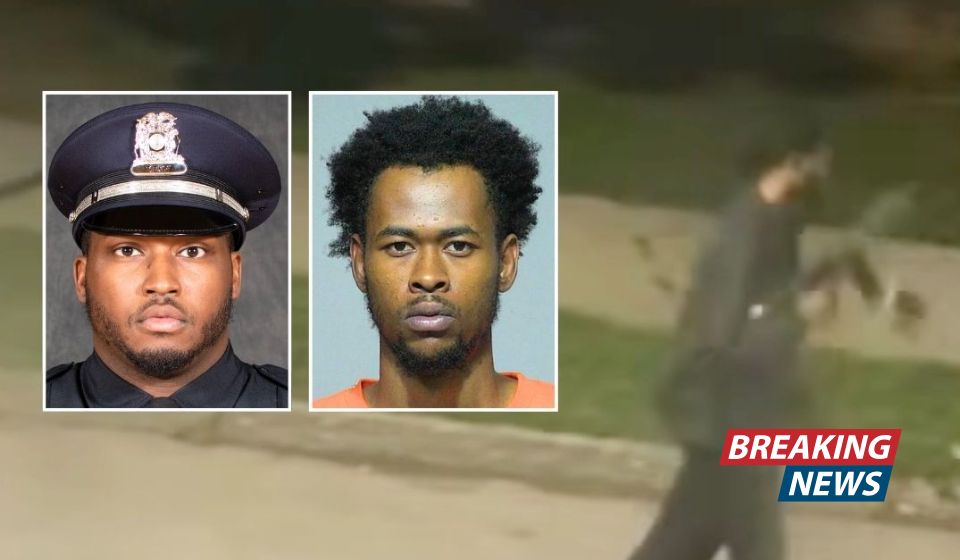

A Wisconsin man who ambushed two Milwaukee police officers and unleashed 16 rounds from a rifle during a deadly attack has been sentenced to spend the rest of his life in prison without any possibility of parole. The sentence brings a close to a case that shocked law enforcement officials and the Milwaukee community after one officer was killed and another seriously wounded during what prosecutors described as a calculated ambush.
Life Sentence Handed Down
On June 12, 2026, Milwaukee County Judge Michelle Havas sentenced 23-year-old Tremaine Jones to life in prison without eligibility for parole for the murder of Milwaukee Police Officer Kendall Corder. The sentence followed Jones’ conviction on multiple felony charges, including first-degree intentional homicide, attempted first-degree intentional homicide, first-degree recklessly endangering safety, and possession of a short-barreled rifle. The life sentence was mandatory because of the homicide conviction, but the judge also determined that Jones would never be eligible for release.
The sentencing hearing was emotional as family members, police officers, and community members gathered in court to hear the punishment imposed on the man responsible for one of Milwaukee’s most devastating attacks on law enforcement in recent years.
The Night That Turned Deadly
The shooting stemmed from a chaotic series of events on the evening of June 26, 2025. According to prosecutors, a dispute erupted between two women who were reportedly arguing over a romantic relationship. During the altercation, another man carrying a firearm intervened in an attempt to break up the fight. One of the women became upset and contacted Tremaine Jones.
Jones soon arrived armed with a short-barreled rifle. Witnesses and cellphone video later showed him walking through the neighborhood while carrying the weapon and making threatening statements. Prosecutors told jurors that Jones was angry and aggressively firing shots in the area before police were called. Multiple 911 calls alerted authorities to an armed man in the neighborhood.
Officers Respond to Reports of a Gunman
Milwaukee Police Officer Kendall Corder, 32, and Officer Christopher McCray, 29, responded to the calls reporting a person armed with what witnesses described as a rifle or machine gun. The officers arrived near North 25th Street and West Garfield Avenue and began searching the area for the suspect.
Rather than surrendering or fleeing, prosecutors said Jones concealed himself in bushes and waited for the officers to approach. Investigators later concluded that he deliberately ambushed the officers as they arrived on the scene.
Ambush Unfolds in Seconds
Evidence presented during trial showed that Jones fired 16 rounds from his rifle at the officers. Prosecutors argued that the barrage of gunfire was relentless and intentional. Assistant District Attorney Grant Huebner told jurors that Jones fired 13 shots at one target before pausing and firing additional rounds.
Officer Corder and Officer McCray were unable to effectively return fire because they were struck almost immediately after the ambush began. The attack left both officers severely wounded.
Officer Kendall Corder’s Fatal Injuries
Officer Corder suffered multiple gunshot wounds, including injuries to his neck, arm, and lower leg. He was rushed to Froedtert Hospital, where medical personnel fought to save his life. Despite extensive treatment, he succumbed to his injuries three days later. He was 32 years old.
His death sent shockwaves throughout Milwaukee and law enforcement agencies across Wisconsin. Colleagues remembered him as a dedicated public servant who had responded to a dangerous situation in an effort to protect the community.
Officer Christopher McCray Survived
Officer McCray also suffered serious gunshot wounds. He was struck in the foot, thigh, and back during the attack but survived. After receiving treatment, he eventually recovered, though the shooting left lasting physical and emotional scars. The Milwaukee Police Department later praised his courage and continued to support his recovery process.
Investigators Piece Together the Evidence
Crime scene investigators recovered 16 rifle cartridge casings from the area. Authorities later located a rifle abandoned near a fence line. Forensic testing determined the weapon was consistent with the firearm used to fire all 16 shots during the ambush. Investigators also recovered a fingerprint linking Jones to the weapon.
Additional evidence included a backpack found in a nearby yard containing Jones’ Social Security card, birth certificate, and debit cards. Investigators also located a receipt showing that Jones had purchased the firearm only days before the shooting.
Jones was arrested the following morning at a residence in Milwaukee. Witnesses later told investigators that he believed he had shot and killed a police officer and expressed concern about needing to flee.
Trial Revealed Damaging Evidence
The trial lasted several days and featured testimony from 34 witnesses. Jurors reviewed nearly 300 pieces of evidence, including surveillance footage, cellphone video, forensic evidence, and witness statements. Prosecutors argued that the evidence overwhelmingly demonstrated that Jones intentionally opened fire on the officers.
One particularly significant piece of evidence involved a jail phone call between Jones and his mother. Prosecutors argued that statements made during the conversation reflected an awareness of what he had done. During closing arguments, prosecutors highlighted the call as evidence of guilt.
Defense attorneys attempted to argue that Jones did not realize he was shooting at police officers and believed the individuals were other people from the neighborhood. Prosecutors countered that the claim did not diminish the fact that he intentionally fired multiple rounds and caused catastrophic injuries.
Jury Deliberates Briefly Before Convicting
After hearing the evidence, jurors deliberated for less than three hours before finding Jones guilty on all counts. The verdict included convictions for first-degree intentional homicide, attempted first-degree intentional homicide, first-degree recklessly endangering safety, and possession of a short-barreled rifle.
The relatively brief deliberation reflected the strength of the prosecution’s case and the extensive forensic evidence connecting Jones to the shooting.
Jones Offers Apology Before Sentencing
Prior to sentencing, Jones submitted a letter expressing remorse. In the statement, he apologized to the court, prosecutors, victims, and the victims’ families. He acknowledged that Officer Corder lost his life and that Officer McCray suffered serious injuries. Jones claimed he wished he could go back and change what happened.
Despite the apology, prosecutors and supporters of the slain officer argued that the brutality of the ambush warranted the harshest punishment available under Wisconsin law.
A Sentence Ensuring Permanent Imprisonment
Judge Havas ultimately imposed life imprisonment without the possibility of parole, ensuring Jones will spend the remainder of his life behind bars. The sentence also included penalties tied to the additional felony convictions.
For Officer Corder’s family, fellow officers, and the Milwaukee Police Department, the sentence represented a measure of justice after a devastating ambush that claimed the life of a respected officer and forever changed the lives of many others. The case now stands as one of Milwaukee’s most significant prosecutions involving the murder of a police officer in the line of duty.