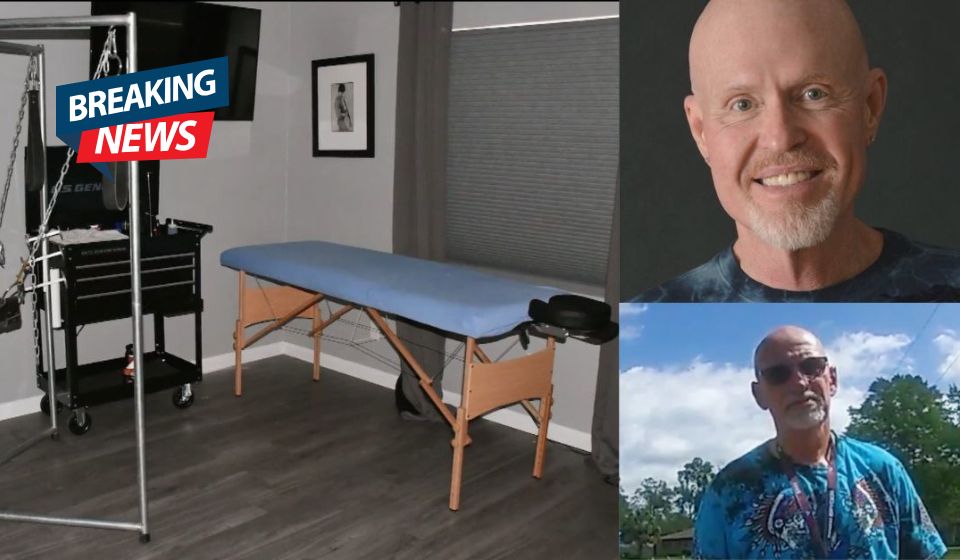
Health Care Executive Drugged, Strangled by Husband in Shocking ‘Sex Studio’ Crime Scene, Investigators Reveal

What initially appeared to be a mysterious death soon evolved into a complex homicide investigation after health care executive Timothy Floyd Smith was found dead in an apartment in Ocala, Florida. Smith, a well-known executive at an assisted-living facility, failed to report to work, prompting concern among colleagues and ultimately leading authorities to discover his body. Investigators immediately noticed troubling signs, including a ligature mark around his neck and evidence of severe physical trauma.
Smith, 59, was widely regarded as the primary financial provider in his household. Friends and coworkers reportedly described him as respected, dependable, and successful in the health care industry. His death shocked both his professional community and those who knew him personally.
Investigators Uncover Evidence of Drugging Before Death
As forensic experts examined the case, toxicology findings revealed a disturbing detail. Prosecutors alleged that Smith had been administered an extraordinarily high dose of diphenhydramine, a common ingredient found in medications such as Benadryl and some sleep aids.
According to investigators, the amount detected in Smith’s system was approximately 30 times greater than a normal therapeutic dose. Authorities believe the drug was used to incapacitate him before the fatal assault occurred. The toxicology evidence became a central component of the prosecution’s case against Smith’s husband, Herbert Swilley.
Medical Findings Pointed to Violent Assault
Investigators stated that Smith suffered more than just drug intoxication. Authorities reported discovering blunt-force injuries and evidence of strangulation. Prosecutors alleged that the attack was so severe that it resulted in a fractured cervical spine.
The combination of drugging, physical violence, and strangulation led investigators to conclude that Smith had been deliberately murdered rather than dying from natural causes or accidental circumstances.
The Apartment Investigators Called a ‘Sex Studio’
One of the most shocking revelations involved the apartment where Smith’s body was ultimately discovered.
According to court records and investigative findings, the couple maintained a second apartment separate from their residence. Swilley allegedly told investigators that the location was used for sexual encounters involving other partners whom the couple met through social media. Prosecutors later argued that this apartment became the centerpiece of an elaborate effort to conceal the murder.
Crime Scene Allegedly Staged to Mislead Detectives
Authorities believe Smith was not killed inside the apartment where his body was found. Instead, investigators alleged that after the murder occurred, Swilley transported Smith’s body to the secondary apartment and staged a false crime scene.
Prosecutors argued that the scene was designed to make it appear as though Smith had become involved in a sexual encounter that turned violent or resulted in his death under suspicious circumstances unrelated to his husband. Investigators further claimed that cleaning products were used in an attempt to destroy forensic evidence and complicate the investigation.
Financial Motive Emerges During Investigation
As detectives examined the couple’s finances, prosecutors developed a possible motive for the killing.
According to court proceedings, Smith had named Swilley as the beneficiary of significant financial assets, including a life insurance policy worth approximately $333,000 and retirement-related funds totaling roughly $48,000. Prosecutors alleged that these benefits gave Swilley a financial incentive to commit the crime.
Marriage Reportedly Facing Difficulties
Court testimony indicated that the couple’s relationship had deteriorated in the period leading up to Smith’s death. Prosecutors argued that the marriage was unraveling and suggested that tensions had increased as Smith considered major life changes.
Jurors reportedly heard testimony that Swilley expressed concern about the possibility of Smith moving on and leaving the relationship. Authorities argued that these circumstances provided additional context for the alleged motive.
Investigators Reconstruct the Timeline
According to prosecutors, the sequence of events began with the administration of a large quantity of diphenhydramine. Once Smith was incapacitated, authorities allege he was physically assaulted and strangled.
Investigators then believe the body was moved from the couple’s primary residence to the secondary apartment used for sexual encounters. Evidence presented in court suggested that efforts were made to clean the scene and create a misleading narrative regarding how Smith died.
Vehicle Movements Became Part of the Case
Investigators also examined vehicle movements following the death. Prosecutors alleged that Swilley drove Smith’s vehicle to the apartment where the body was placed and then returned home after attempting to complete the staged crime scene.
Authorities argued that these actions demonstrated planning and an effort to conceal the true circumstances surrounding the murder.
Conviction and Sentencing
The investigation ultimately resulted in murder charges against Herbert Swilley.
Following court proceedings, a Florida jury convicted Swilley of first-degree murder. After the guilty verdict was delivered, he was immediately sentenced to life imprisonment without the possibility of parole. The conviction marked the culmination of an investigation that relied heavily on forensic evidence, toxicology findings, financial records, and the reconstruction of events surrounding Smith’s death.
Lasting Impact of the Case
The murder of Timothy Floyd Smith attracted widespread attention because of its unusual and disturbing details. The allegations of drugging, strangulation, a staged sexual crime scene, and a financial motive combined to create one of the most shocking homicide cases to emerge from Florida in recent years.
Investigators described a carefully orchestrated attempt to disguise a murder as something entirely different. Ultimately, prosecutors argued that forensic science and investigative work exposed the truth behind the elaborate deception, leading to a conviction and life sentence for the victim’s husband.